
学警狙击
China rejects US-led statement on missile test notification, warns against ‘political manipulation’_我的网站

一 |
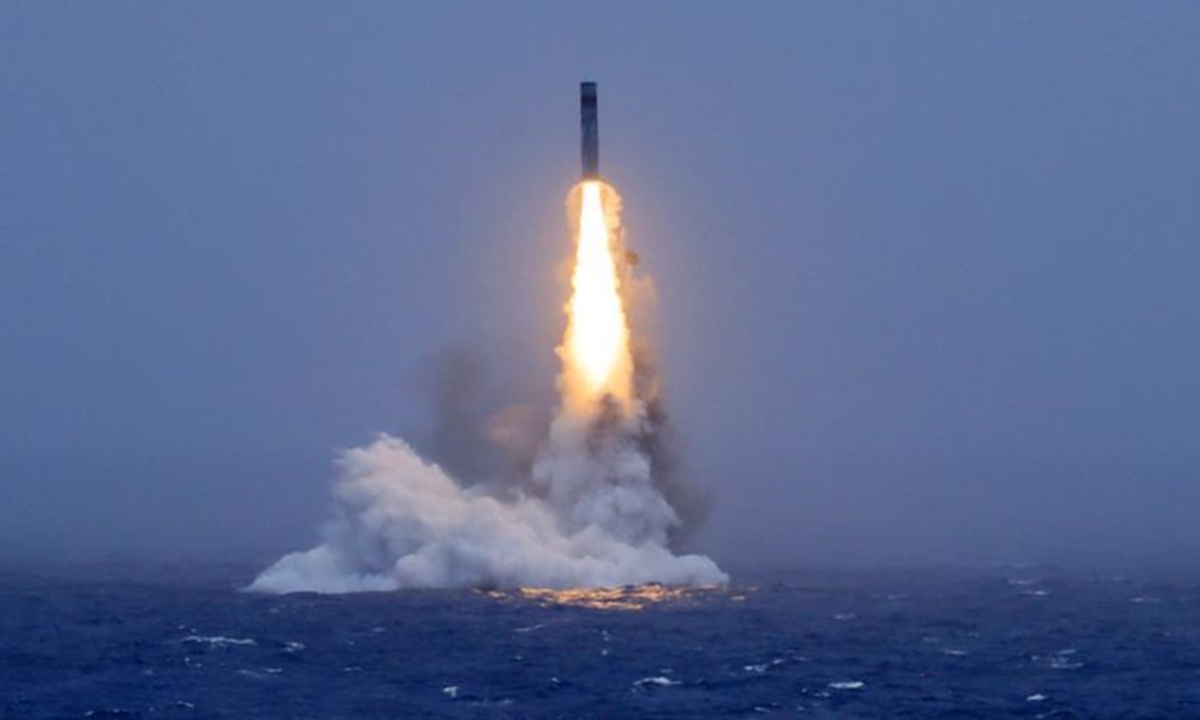
China on Wednesday slammed a US-led joint statement regarding China's notification of a ballistic missile launch, calling the move as being driven solely by political motives and exposing the hypocrisy and double standards of the US and certain countries.
"The so-called joint statement by the US and relevant countries at the Conference on Disarmament, which brandished the Hague Code of Conduct Against Ballistic Missile Proliferation and alluded to China's missile test launch, was driven solely by political motives and fully reveals their hypocrisy and double standards," Chinese Foreign Ministry Spokesperson Guo Jiakun said on Wednesday.
China urges relevant countries to stop abusing multilateral arms control mechanisms, replace irrational confrontation with sincere dialogue and create conditions necessary for enhancing dialogue and exchanges in the area of arms control, Guo said.
The comments came after China's Ambassador for Disarmament Affairs Li Chijiang firmly rejected the US-led joint statement at a UN meeting in Geneva on Tuesday local time, stressing that China's legitimate defense modernization should not be called into question, and its goodwill in providing advance notification of missile launch should not be hijacked by geopolitical calculations.
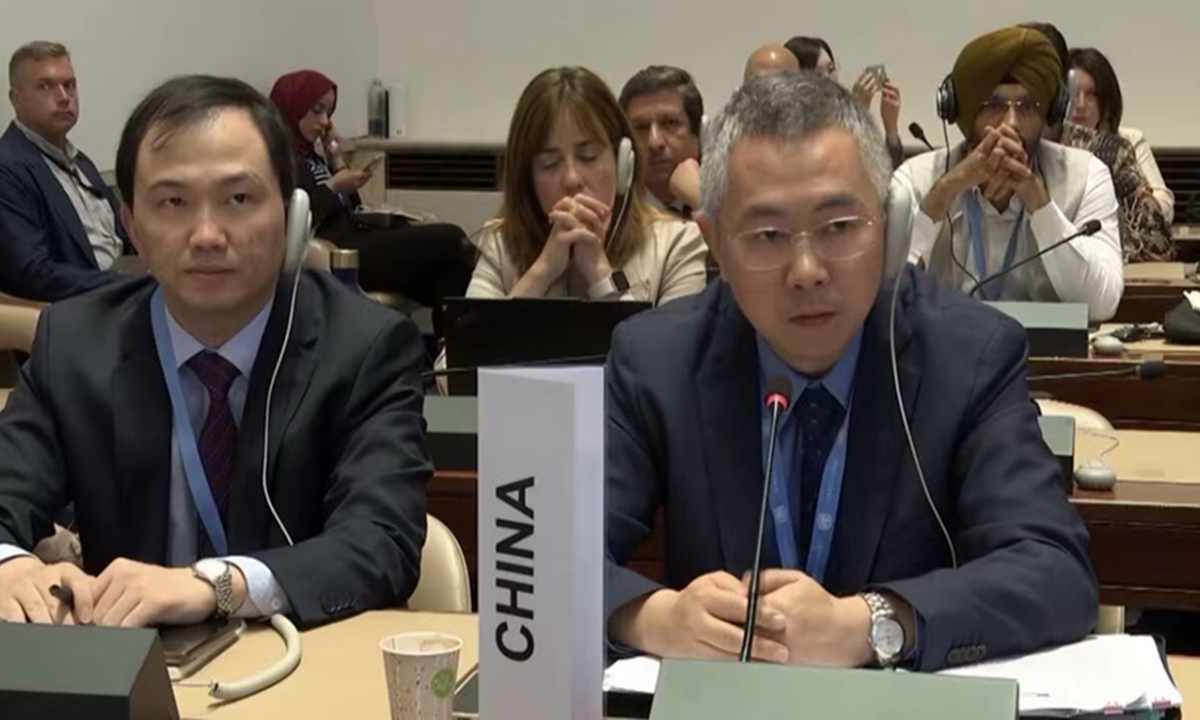
At a plenary meeting of the Conference on Disarmament in Geneva on Tuesday, the US and other 40 countries issued a joint statement on what they called "notifications of ballistic missile launches," criticizing China's submarine-launched intercontinental ballistic missile test conducted in July.
In response, Li Chijiang called the move political manipulation and blatant double standards and said China firmly opposes the abuse of the Conference on Disarmament for political maneuvering.
Driven by its own political interests, the US had rallied a number of countries, including some that are not members of the conference, to join the statement and had nitpicked and leveled baseless accusations against China's goodwill gesture of providing advance notification of the missile test, he said.
He noted that the US criticism was groundless, saying Washington had cited the voluntary political commitment of the Hague Code of Conduct Against Ballistic Missile Proliferation (HCOC) to demand that China provide advance notifications of missile launches. However, China is not a member of the HCOC and is therefore not bound by its provisions.
The Chinese People's Liberation Army Navy announced on July 6 that one strategic nuclear submarine of the navy successfully launched a strategic missile carrying a dummy warhead toward relevant high seas of the Pacific Ocean at 12:01 pm, which landed precisely within the designated waters.
China notified relevant countries in advance of the test launch of a nuclear submarine-based strategic missile, demonstrating the openness and transparency of the Chinese armed forces, said Chen Xi, a spokesperson for the Ministry of National Defense, at a press conference in July.
The US led statement at the Geneva disarmament conference seeks to inject geopolitical rivalry into a multilateral arms control platform. Rather than advancing genuine disarmament, Washington is seeking to stigmatize China as a security threat, constrain its legitimate defense related development and strategic deterrence capabilities, rally an anti China bloc and reinforce US led hegemony, Zhang Junshe, a Chinese military affairs expert, told the Global Times.
The US had repeatedly hyped China's July test launch. Previously on July 8, an official from the US Department of State criticized China's missile test launch, claiming that China notified the US too late and didn't give sufficient detail.
In response, Chinese Foreign Ministry spokesperson Mao Ning said at a press conference that China has stressed more than once that the test launch complies with international law and customary international practice and is not directed at any specific country or target. The Chinese side has released relevant information in a timely manner and notified the US and other countries beforehand.
Distracting attention
The US-led group doesn't represent the international community. Its accusations over China's missile tests lack both reason and legitimacy, reflecting prejudice, hegemonic thinking and an attempt to constrain China's development, said a Beijing-based scholar of China-US relations.
By rallying the other 40 countries to pressure China, the US has once again exposed its familiar playbook of double standards, bloc-building and confrontation. More broadly, Washington's China policy increasingly reflects strategic anxiety and a lack of confidence - not only in governance, the economy, and technology, but also in the military domain, said the expert.
According to the list of 40 other countries published by the US State Department, the signatories include US allies in Europe and Asia. The statement also called on all countries, particularly nuclear-weapon states that launch intercontinental ballistic missiles (ICBMs), submarine-launched ballistic missiles (SLBMs), and space launch vehicles (SLVs), to provide notification at least 24 hours in advance. "Such notifications should include information such as the general class of the ballistic missile or SLV, the planned launch notification window, the launch area and the intended direction of flight."
Zhang Jiadong, professor at the Center for American Studies, Fudan University, said by demanding at least 24 hours' advance notice and detailed launch information, the US wants to gain greater visibility into China's strategic nuclear capabilities by securing earlier and more specific data on missile tests.
By hyping transparency and notification requirements, Washington is seeking to pressure China into revealing more about its military capabilities, reflecting growing anxiety over China's capability, even as questions remain over Washington's own transparency regarding missile tests and nuclear deterrence, said Zhang Jiadong.
Military affairs expert Zhang Junshe also noted that the US has intensified its criticism of China to deflect attention from its own expansion of extended deterrence, nuclear-sharing arrangements and missile-defense programs. These moves heighten the risk of nuclear confrontation, while Washington appears to believe that accusing other countries of lacking transparency can help justify its own military buildup and destabilizing policies.
Moreover, the US possesses one of the world's largest nuclear arsenals and conducts frequent ICBM tests. Against that backdrop, it is absurd for Washington to criticize China, which keeps nuclear capabilities at the minimum level required for national security, said Zhang.
For example, in a single test event last year, the US Navy conducted four scheduled test launches of unarmed Trident II D5LE submarine-launched ballistic missiles from an Ohio-class ballistic missile submarine off Florida between September 17 and 21, 2025. The launches brought the Trident II D5 strategic weapon system to 197 successful flight tests, according to the US Navy.
At the UN meeting in Geneva on Tuesday, China's Ambassador for Disarmament Affairs Li Chijiang also noted that the US was in no position to criticize China over missile testing. China has conducted only three intercontinental ballistic missile tests to date, the fewest among the five nuclear-weapon states, while the US has carried out more such tests, and more frequently, than any other country, he said.
The US has itself failed to properly fulfill responsibilities regarding missile-test notifications and therefore has no grounds to criticize China's voluntary advance notification, Li added.
Li stressed that China remains committed to peaceful development and follows a self-defensive nuclear strategy. China keeps its nuclear forces at the minimum level required for national security and does not participate in any form of nuclear arms race, he said.
China's nuclear forces are an indispensable part of efforts to deter nuclear war, safeguard world peace and security, and maintain global strategic stability. "How can the US, a prolific missile tester and relentless arms expander, fault China for voluntarily giving advance notice? That is hegemonic double standards - and a blatant affront to international fairness and justice," said Zhang Junshe.
。
[ 资讯] 在2025粤港澳车展上,岚图FREE(参数|询价)+内饰正式与公众见面。新车搭载了鸿蒙座舱Harmony Space 5系统,应用了华为乾崑智驾ADS 4。岚图FREE+定位中大型SUV,提供纯电和增程式动力可选,新车将会在6月份开启预售,年内上市。岚图FREE+搭载的15.6英寸2K超清屏可实现五屏联动(中控屏、后排屏、AR-HUD、仪表、冷暖箱控制屏),支持鸿蒙手机一键投屏及跨设备任务流转,音频、导航等信息可无缝同步至车机。后排MagLink拓展坞兼容多品牌平板电脑,实现独立观影与中控交互。
。
二 | 此外,新车将会提供极光紫,琥珀棕,深海蓝三种内饰颜色。

三 |
仿麂皮材质覆盖仪表台、门板等区域
内饰采用“城市光影美学”与“五感沉浸座舱”设计语言,通过触感、体感、听感、嗅感、视觉五大维度构建差异化体验。
四 | 触感方面,座舱95%面积采用软质包裹,仿麂皮材质覆盖仪表台、门板等区域,搭配仿生金丝白桃木装饰。
主驾“撑腰”领航座椅
副驾“太空副驾”配备腿托及163°躺倒功能
体感层面,2960mm轴距带来近1.9米净乘坐空间,主驾“撑腰”领航座椅优化人体工学支撑,副驾“太空副驾”配备腿托及163°躺倒功能,后排座椅支持27度+12度靠背角度调节及极速加热/通风。Voyah Sound音响系统
听感上,新车搭载Voyah Sound音响系统,配备22扬声器、7.1.4全景声场及双头枕音箱,还支持超跑声浪模拟,进一步调动驾驶欲望;嗅感应用OEKO-TEX认证面料与CN95空调滤芯保障车内空气质量;视觉以浮岛式布局、256色光瀑氛围灯及 “时光模式” 动态光影为主,主打营造科技与温馨兼具的座舱氛围。256色光瀑氛围灯
作为“华为系”首款搭载HarmonySpace 5座舱系统的量产车型,岚图FREE+实现智能交互与生态互联的全面突破。系统搭载云端语音训练引擎,支持一句话多意图、连续对话及音区锁定,语音助手“小艺”可学习用户习惯并优化交互体验。系统还提供小憩、洗车、离车不下电、露营四大情景模式,通过自动调节座舱环境参数,适配多样化用车场景。鸿蒙生态支持5万+手机应用上车,结合HSpace-Link外设开放协议,未来可扩展更多智能设备联动。7L冷暖箱

五 | 并且还搭载了EDC魔毯悬架,具备5种驾驶模式可选,并且还增加了预判路况的能力。据了解,岚图FREE+的量产版本预计于2025年内上市。关于新车的更多信息,我们会持续报道。

六 | (文/ 李娜)
Current article:http://www.liaoenxingunchuanglou.buzz/okxeg/hdk.pptx
Published on:06:58:55