熊出没之夺宝熊兵
Chinese team develops intelligent vision sensor that turns light signals into AI-ready tokens, reducing use of energy_我的网站

A | Danielle 编译 据Newshub报道,本周二(2月13日),退休委员会发布了一份文件,概述了新西兰养老政策,建议将养老金(NZ Super)的领取资格保持在65岁。
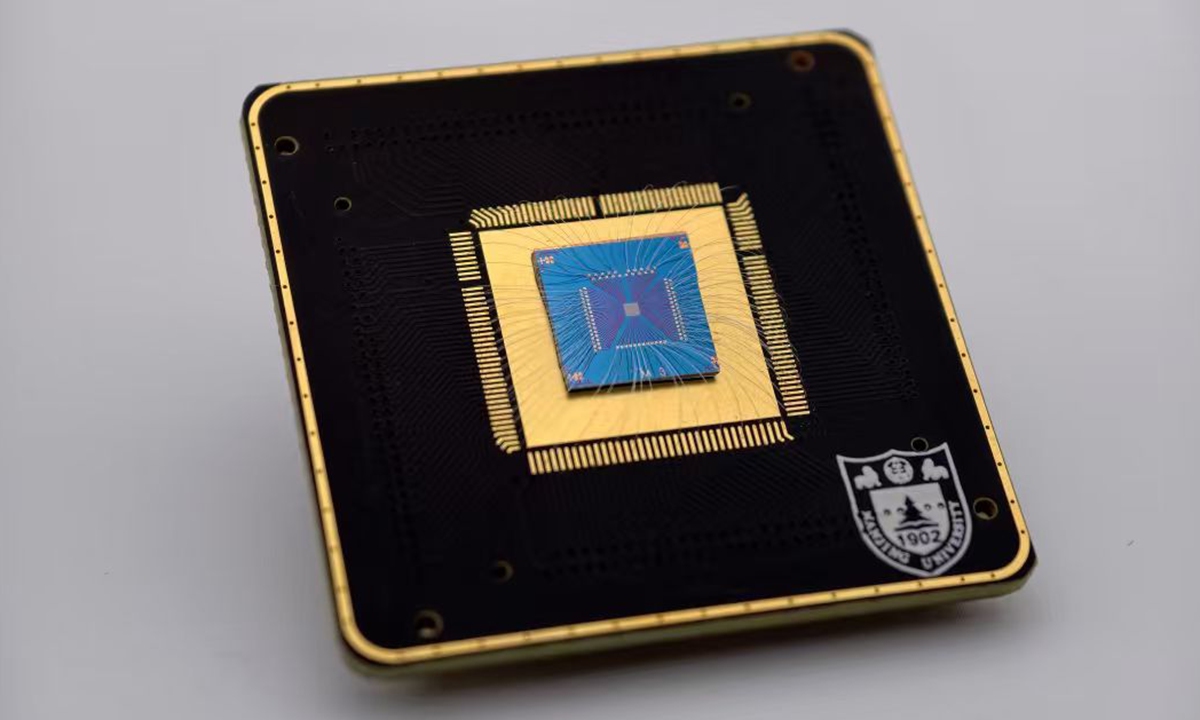
A Chinese research team from Nanjing University has developed a new ultra-low-power intelligent vision sensor chip, dubbed "LightTok," that can convert light signals into tokens within the sensor, significantly reducing the high energy consumption caused by frequent transfers of massive amounts of redundant data, the principal investigator told the Global Times.
According to a release from the Institute of Brain-Inspired Intelligence of Nanjing University, tokens generated by the LightTok chip can be directly fed into a Transformer encoder for image recognition.
"Our design idea was to move token generation onto the sensor itself, allowing the chip to directly produce tokens that AI models can process once light reaches the sensor," Miao Feng, director of the Institute of Brain-Inspired Intelligence at Nanjing University, told the Global Times on Thursday. "These tokens contain complete image information."
Physical AI refers to intelligent systems capable of autonomously perceiving, reasoning, acting and receiving feedback in the real world, representing a key pathway for AI to move from the digital realm into the physical world. Vision-based physical AI systems powered by large AI models need to convert visual information from real-world environments into tokens that can be processed by AI models before feeding these tokens into Transformers for subsequent tasks.
In traditional visual perception pipelines, light signals must go through multiple stages, including image sensing, analog-to-digital conversion, data buffering and transfer, digital image patching and embedding, before being transformed into tokens that AI models can process. The frequent transfer of massive amounts of redundant data has resulted in high energy consumption at the edge, according to a report by Science and Technology Daily.
The LightTok chip directly addresses a key challenge in physical AI hardware: how to efficiently acquire and tokenize visual information from the physical world with low energy consumption, Miao said.
The LightTok chip consists of a photosensitive memory array and peripheral circuits. The team built the array based on single-layer molybdenum disulfide (MoS₂) floating-gate phototransistors, with each pixel capable of sensing light, storing information and performing analog computing. By processing optical information directly within the chip, the device can convert captured visual signals into tokens for AI models, according to the research team.
The current LightTok prototype has a resolution of 32×32 pixels, or 1,024 photosensitive pixels, which is still smaller than that of smartphone cameras and industrial imaging systems. However, Miao said the technology is compatible with CMOS manufacturing processes and can be scaled up. With wafer-level growth of molybdenum disulfide materials, the chip could potentially achieve a scale comparable to existing imaging devices.
Miao said the chip also draws inspiration from the information-processing mechanism of human vision. Similar to how the retina extracts key visual information before transmitting it to the brain, the chip also aims to process visual information at an early stage.
The research was conducted in collaboration with another research team from the National University of Singapore. The findings were published on Wednesday in Nature Sensors, an internationally renowned journal in the field of sensing technology, according to the release.
Potential applications for LightTok include drone systems, autonomous remote sensing and small-scale embodied AI systems, Miao said. In these scenarios, devices need to continuously detect, understand and track targets, generating massive amounts of visual data. By reducing the energy required for visual processing, the technology could extend the operating time of drones, satellites and small robots with limited power supplies, the expert said.
。

B | Advertise with us 文件中,一项数据引人注目:领取养老金的老年人中,有近5万人年收入超过10万纽币(2021/2022财年的应税收入),占领取者的6%,即49368人。 因此,报告建议引入“收入测试”,在人们领取养老金前进行测试。委员会认为这是一种公平的方式,可以降低养老系统的成本,避免盲目提高领取年龄。 此前,对于“收入测试”的呼声不绝于耳。 《Newstalk ZB》的主持人John MacDonald在昨天的节目中表示,他支持引入“收入测试”。他质疑道:“为什么一些人的救命钱,却是另一些人的啤酒钱?” 退休专员Jane Wrightson指出,继续工作的老人的收入往往远超养老金。

C | 有人担心,由于新西兰人口老龄化,养老金成本可能会过高。统计局的数据显示,到2028年,新西兰将有五分之一的人年龄在65岁或以上。 经济学家Cameron Bagrie去年曾警告,如果不改变现行养老制度,新西兰将面临政府债务失控的局面。“财政部预测,如果我们不做出改变,政府净债务将占GDP的190%。”“目前的养老系统是不可持续的,我们需要做出改变。

D | ” 相关阅读: 还能65岁退休吗?以后领新西兰退休金要先收入测试? 与澳大利亚的养老金制度相比,新西兰的KiwiSaver差一大截 三个简单的金钱错误 让新西兰人白白错失了多少钱 权威报告:新西兰生活成本危机已影响到退休金 注:本文为编译/原创,欢迎转发分享;但严禁复制等未经授权的非法使用。违反上述声明者,本网将追究其相关法律责任。使用授权请联系[email protected]。 chineseherald.co.nz All Rights Reserved 版权所有 (责编:丹妮) 来源 - 相关内容 基督城大火蔓延630公顷,大量房屋疏散,警方呼吁:不要围观妨碍灭火! 新西兰打环境官司,全世界都在看 警惕!科罗曼德尔一养老院爆发严重流感疫情,致六人死亡 奥克兰这家超市也发现老鼠!视频曝光...... 新西兰政坛巨头联合发声:关于中国,请奉行独立外交政策! 新西兰这波疫情高峰过了吗?93%的感染是由于这一变种 还能65岁退休吗?以后领新西兰退休金要先收入测试? 您有一份邀请函待接收!国会议员邀您共庆龙年。
Current article:http://www.liaoenxingunchuanglou.buzz/news/20260826_91736.pptx
Published on:20:24:51


