
猎场
Proposed US rule barring China science collaboration sparks outcry from US scientists_我的网站

一 | 图为12月21日,消费者正在采摘火龙果。

二 | 近年来,建昌县建昌镇南营子村在倾力发展设施农业的同时,深研“南果北种”的有效路径,并获得成功。

三 | 两年前,建大棚种3000株火龙果,一半是红色的,一半是黄色的。

四 | 9月初开始逐渐采摘,目前正是采摘旺季,一直能持续到来年2月,能产生8万余元效益。

五 | 《日报》全媒体记者 张宝程 摄。
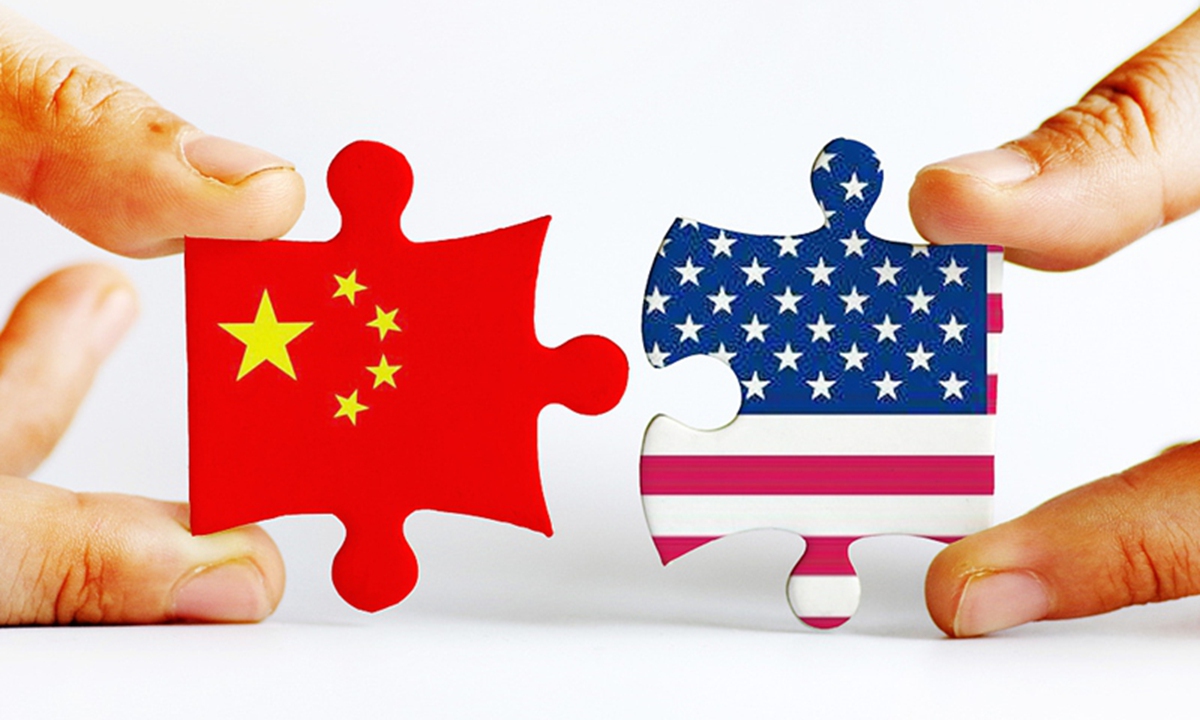
The proposed Office of Management and Budget (OMB) rule, set to take effect in December, would mark one of the biggest overhauls of US science funding in decades, giving political appointees greater authority over grant awards previously guided by scientific peer review and requiring that they "advance the President's policy priorities," according to the Washington Post.
It would also effectively expand the 2011 Wolf Amendment, which bars scientists from using NASA funding for bilateral collaborations with China, to all federal agencies and scientists receiving federal funds, marking the largest break in US-China scientific engagement in decades, the US media outlet reported.
So far, the proposed rule has garnered nearly half a million public comments, many from scientists and leading US science bodies. A Washington Post analysis of 50,000 of those comments found that around 88 percent were negative.
The rule, initially set to take effect in October, was pushed back to December after a bipartisan stopgap funding bill temporarily halted its adoption. Unlike the Wolf Amendment, the rule does not require congressional approval to take effect.
"I do think there are still members of Congress who think we have a monopoly on knowledge. They think we're still in the Cold War Soviet era ... where we were ahead in most areas of science and technology. That is not the case with China. We are no longer the leader in many areas of science," said Tobin Smith, senior vice president for government relations and public policy at the Association for American Universities, which advocates on behalf of leading US research universities, per the Washington Post.
Scientists warn that the rule risks subjecting long-term scientific research to four-year political cycles. "We will not succeed if with every new administration we are ping-ponging back and forth about priorities," the American Association for the Advancement of Science said in a blistering comment, urging the administration to withdraw the rule. "Fast-tracking such profound changes ... hands an easy victory to nations like China," it said, the Washington Post reported.
This reflects a fundamental divide between the US government and the scientific community over how science should develop, Wang Yiwei, a professor at Renmin University of China's School of International Studies, told the Global Times. He noted that politicians tend to believe that suppressing China as a competitor would allow the US to preserve its market dominance and technological edge.
Scientists, however, tend to follow a different logic, as scientific progress depends on openness, exchanges and collaboration. If science and technology are driven solely by competition and private capital, with the ultimate goal of maintaining technological monopolies, this could create greater risks and ultimately undermine US interests as well, Wang said.
The proposed rule change is the latest salvo in a broader battle in Washington over how to respond to China's rise as a scientific superpower. In July, the US National Science Foundation (NSF) also moved to ban collaborations between scientist it funds and many Chinese research institutions and their employees, according to Science magazine.
Liu Shaoshan, director of the Center for Embodied AI at the Shenzhen Institute of Artificial Intelligence and Robotics for Society and a former US-based researcher, told the Global Times in a previous interview that the NSF's new proposed rules created a "talent wall," arguing that restrictions based on nationality, institutional affiliation, and research partnerships could reduce the global talent pool available to the US, weaken its ability to attract leading scientists, and slow scientific innovation.
Liu also said scientific advancement relies not only on discovery but also on the exchange, validation, and dissemination of knowledge.
Wang also said China has built significant strengths through its vast pool of scientists and engineers, complete industrial chains and massive application scenarios, while increasingly moving from application-oriented innovation toward original research. Against this backdrop, US technological blockades and restrictions on cooperation are unlikely to halt China's progress, but could instead isolate American scientists from China's latest research and collaboration opportunities. Such an approach could also prevent the two countries from leveraging their respective strengths and ultimately undermine US competitiveness, Wang said.
。
Current article:http://www.liaoenxingunchuanglou.buzz/0qowiw/20260826/4056825.doc
Published on:14:32:29
我的网站最新文章
- Must continue to act against terror: India on Pak's removal from FATF grey list
- 24 个调试补丁、18 次内核启动:Linux 之父托瓦兹借助 AI 定位 Intel Xe 黑屏故障
- 短时暴雨!7~9级雷雨大风!杭州的雨还要持续
- 运往俄罗斯的铁路货物关税,中国大幅上调,但责任真不在我们
- 财政部:财政金融协同促内需政策已优化完善
- 奋进强国路 阔步新征程丨金“药”匙开启“致富密码”
- 17岁男子、16岁男子两人持刀追逐13岁男子 被湖南湘潭市警方拘留
- 深圳:以硬核创新铺就强国奋进路,深圳:以硬核创新铺就强国奋进路
- 台积电赴美建厂,利润会被吃掉多少?
- iOS 27代码显示苹果可对欠款租赁设备启用受限模式
- “去依赖”正在发挥作用!德媒:8年来美国首超中国成为德国最大贸易伙伴
- 英伟达被曝大规模收购暗光纤资源
- China-led life sciences journal Vita releases first print issue
我的网站随机推荐
- 世园进家园 在成都共享“绿色”与“书香”
- 又一款百万级?阿维塔将打造全新大六座旗舰SUV 计划2026年上市
- 警惕!这些照片,别随便晒!
- 解码“杭州服务”一座服务业标杆城市的成长逻辑
- “星火鼓楼·奋进新程”鼓楼区第二届红色运动会体能挑战赛圆满收官
- 卖不动还涨价!Cybertruck产能利用率不到10% 特斯拉却先涨价5000美元
- GTA6 泄密者发布夜总会实机视频,并为其加密货币计划辩护
- 售价82.88万 新款福特F-150猛禽正式上市
- 科学家对质子的康普顿散射进行新的测量
- 交通运输部维持强降雨二级防御响应
- 营收净利双降!雅迪控股公布半年报 净利润12亿元大降近3成
- raksamart东京多ip服务器搭建注意事项
- 2026年福马女生夏令营开营